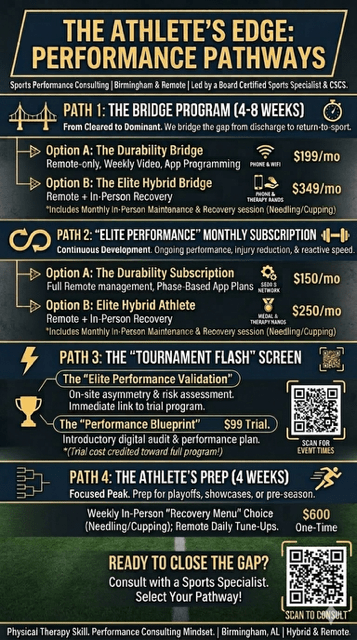
***Programs are individualized with the primary goal of keeping the athlete on the field and court while improving performance.
CONTINUE your sport without injury stealing your confidence.
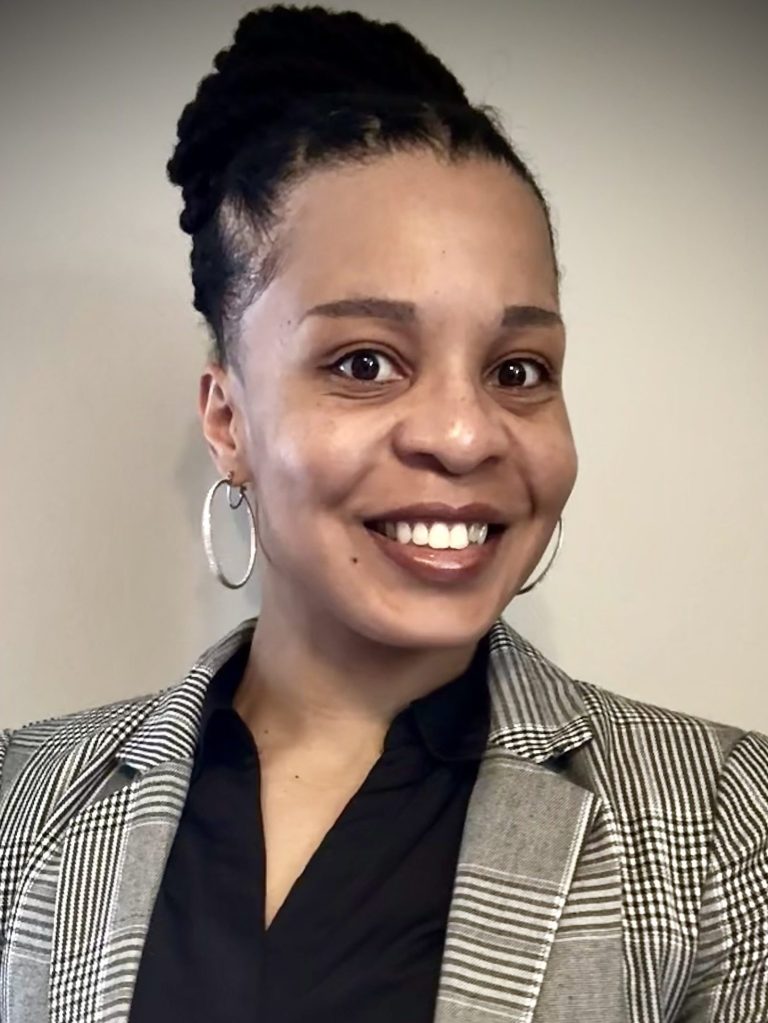
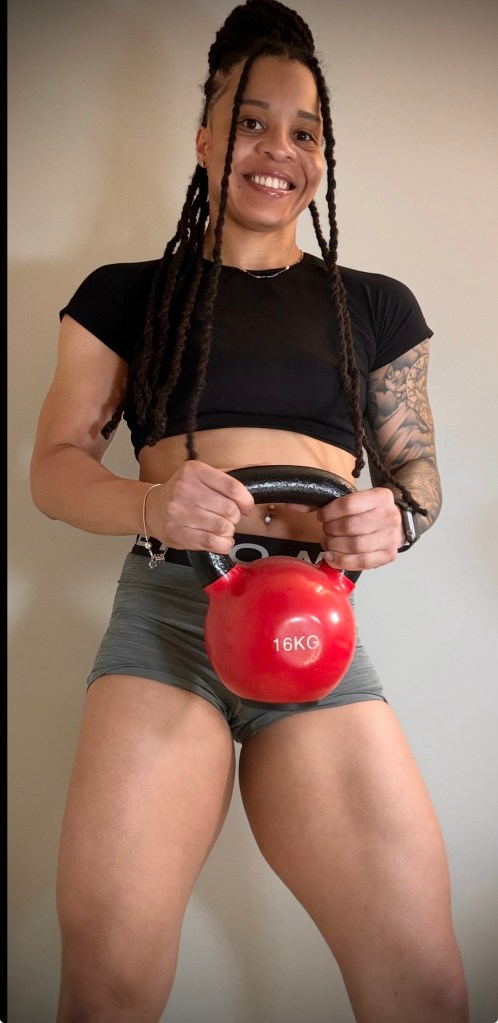
Dr. Johnitia Williams is a Sports Performance Consultant, who has a Board Certification as a Clinical Sports Physical Therapist and Certified Strength and Conditioning Specialist. She has 12 years of experience working with fitness enthusiasts, competitive youth, high school, college, and professional athletes.
Teams she has worked with: Miles College and Legion FC
She specializes in injury prevention, recovery, and return-to-play rehabilitation for COMPETITIVE court and field athletes who want more than basic physical therapy and training.
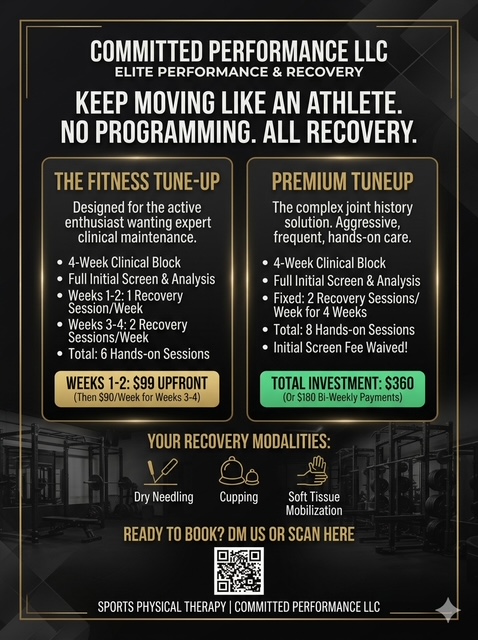
YOU ARE NOT RESTRICTED FROM PLAYING YOUR SPORT. NOR ARE YOU REQUIRED TO TAKE TIME AWAY FROM SPORT TO RECEIVE SERVICES. THIS IS NON-MEDICAL. A GREAT OPTION FOR ATHLETES WHOSE INSURANCE LIMITS VISITS.
KNEE SPECIALIST FOR COURT & FIELD ATHLETES
Who would benefit?
AAU Basketball Players
Club & ECNL Soccer Athletes
High School Varsity Athletes
Lacrosse Athletes
Volleyball Athletes
Football Athletes
Professional Athletes Preferring Specialization
Athletes Preparing for Tournament Season
Cleared/Unrestricted Athletes. Post operative or struggling with a chronic injury.
Athletes Recovering from Injury BUT lacking confidence
Insurance No Longer Covering Care But You’re Not Completely Ready To Play
Ex -Athletes & Fitness Pros
Fitness, recovery, and performance are my passion. I know what injury, surgery, and return to play are like. I was a collegiate athlete and I’ve worked with athletes up to the professional level. What can I help you with?
Follow on social media for content containing exercises
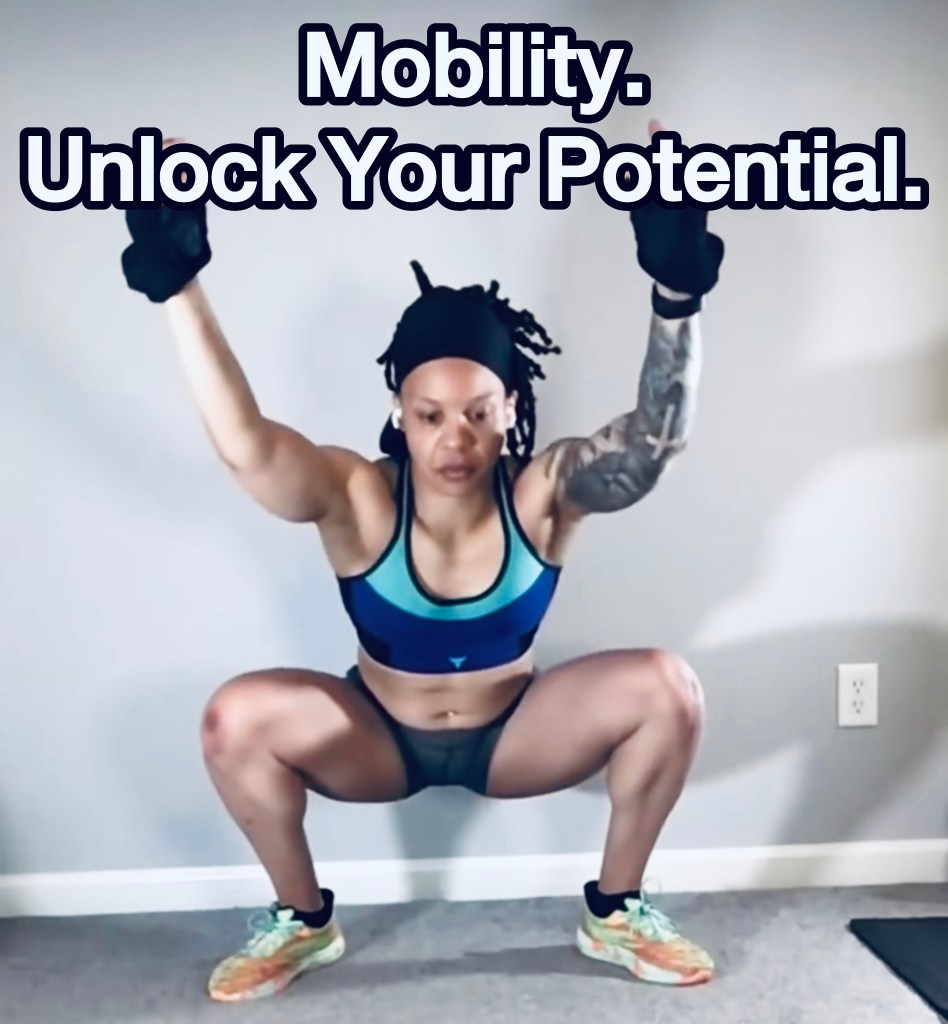
Quick Tips For Improving Mobility
Most strength and power athletes lack mobility. This is due to increased stiffness at the musculotendinous unit, which is a common adaptation to increased training loads. This morphological change is consistent with the favorable changes in cross-sectional size of skeletal muscle (hypertrophy). Weight trainers need improved muscle size. This allows for more force development. In order to reap the full benefits of having increased muscle size and contractility, the joints involved in performing the athletic movement must be able to move freely. This does not indicate hypermobility but the ability to move within the potential range of the joints.
3 Ways To Unlock Your Potential
1. Include warmup drills and possibly post training mobility work that address the major mobility joints.
If your movement is restricted, it’s likely due to decreased mobility at the “mobile” joints: ankles, hips, thoracic spine, and shoulders. Self-assess these joints so that they meet your needs. Tests include the knee-to-wall ankle mobility test and the overhead squat test to determine hip and shoulder mobility limitations. If you lack ankle mobility, then the knee-to-wall ankle mobility test can be your ankle mobility exercise. While the hip could benefit from several dynamic stretches, the shoulder may benefit from thoracic spine mobility exercises.
2. Tools can improve the effectiveness of the mobility drill.
Try pin and stretch using a massage lacrosse ball or apply a massage gun to tight muscles that restrict joint mobility. If you have a stretch strap present then utilize it at the hip and ankle to help mobilize the joint during mobility drills such as hip flexor lunge stretch and knee to wall stretch.
3. Utilize contract relax.
If a muscle limits joint mobility and you’re having a difficult time getting it to relax, then don’t bounce in the stretch, instead utilize contract relax. This can be incorporated in any stretch. The contraction should be held 5-6 seconds.
Simple Keys To Training Athleticism
Athletes Recognize What Athletes Need
Athleticism includes the physical qualities of strength, power, agility, and conditioning. When we work to improve one quality, we can often neglect other qualities. This is why we must understand how to utilize undulated periodization. Training should be specific to each quality on designated weeks, days of the week, and even times of the day.
Training Tips That Meet Most Athletic Goals
1.Have Realistic Expectations. What are you WILLING to work to achieve? Why does it MATTER to you? Commit to something that you are sure that you can do CONSISTENTLY.
2.We Get to Choose Our Response. Hold yourself accountable. There are always going to be unexpected events that happen in life. Everyone has some level of responsibility, so remember tip one. Also time is relative. Make sure that the time matches what you're willing to commit to achieving.
Thoughts: How are you making use of your time? Is your time being used meaningfully? It's better to do something than nothing.
3. You don't need a lot of equipment. Make sure that workout equipment matches your needs and goals. Equipment use can vary throughout a workout program but focusing on compound movements will give you the best results. These movements target multiple muscles at one time and are the most efficient method of training. Aerobic exercises don't always require equipment either. Develop a HIIT workout or go for a good run. These options don't necessarily require a lot of equipment or any equipment at all to meet most general fitness goals.
4.Don't just strength train or only perform cardio. Plyometric training can improve tendon resilience and reaction time. As we age tendons are less compliant and become more susceptible to injury. Also tendons are apart of your body's ability to absorb forces, so all athletes AND fitness participants should include plyometric training. Plyometric training can be linked to improvements in strength and power.
5. Train what you want to achieve.
Strengthening, power and muscular endurance all require specific programming.
Are you ready to bridge the gap between rehab and performance?
Simple Tips For Recovery
5 Contributors
Nutrition-Improve quality of macros and micros. Use of proper meal timing throughout the day. Consider fasting windows, 12 hour windows most beneficial for weight management. Meet individualize caloric needs. Ensure proper pre, intra and post training fueling.
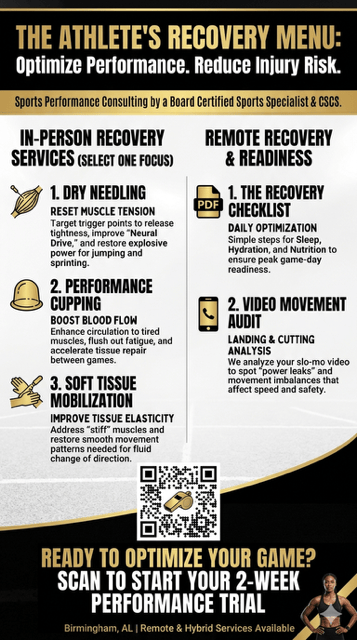
Active Recovery- Improve blood flow, remove waste and resolve muscle soreness through mobility, flexibility, and active recovery (often better than passive rest unless recovering from intense activity) techniques. Soft tissue mobilizations using foam roller, massage gun, and dry needling.
Sleep-Circadian Rhythm is linked to metabolism and effects hormone balance. Less than 8 hours of sleep affects aerobic output, increases risk for injury, decreases cognitive function, decreases skill development and is linked to obesity.
Stress Management- Nervous system recovery from exercise and everyday stress. Meditation and journaling train the mind for safety while breathing exercises reduces energy expenditure through air flow. All improve nervous system activation.
Relationships- Support systems should POSITIVELY regulate nervous systems. Choose wisely.